
Into the Museo: Where Time Slows and Stone Breathes

Updated: Sep 14
The boat left early, cutting clean through the flat blue water north of Cancún. The sun was already working, but the air still carried a softness that would not last. Isla Mujeres sat low on the horizon, quiet and sure of itself. It did not need to announce anything. The water did that.
We went out to dive.
The first descent was into the Museo Subacuático de Arte (MUSA), though no name quite prepares you for it. You drop beneath the surface and the world changes from wind and light to silence and suspension. Then the figures appear.
At first they look like ghosts standing still. Then you see the coral beginning to claim them.
The statues were placed here years ago, over 500 of them, set carefully on the seafloor to do two things at once: create art and give the reef a place to grow. It took several years to complete, with sculptor Jason deCaires Taylor working alongside conservationists to build something that would last longer than any gallery on land. The materials were chosen to invite life, not resist it.
And life came.
You drift past The Silent Evolution, rows of human figures standing in quiet formation. Their faces are calm, but the sea has already begun its slow work. Coral fingers reach across shoulders. Algae paints the edges. Small fish slip in and out of eye sockets and between arms. It is not eerie. It is patient.
At one point, a statue known as Man on Fire rises from the sand, covered in what looks like flame. It is coral, of course. Fire turned to reef. The irony sits there without explanation.
The water is clear enough that light reaches everything. It moves across the sculptures in soft waves, like breath.
You don’t stay long in one place. The current has its say. But even in passing, you understand the idea: this is what happens when humans try, for once, to leave something that gives more than it takes.
From the stillness of stone, you move to the living reef of Manchones Grande, where nothing holds still for long.
The coral here is thick and varied, shaped by time and current. You see brain coral, fans that sway like slow flags, and hard structures that have stood through storms you never felt. The reef does not need decoration. It is already complete.
Lobsters come first.
They sit tucked into crevices, antennae reaching out like questions. You find two sharing a space, their shells marked and worn, moving just enough to let you know they are watching. They are not afraid. Just aware.
Farther along, a stingray lifts from the sand with no effort at all. One moment it is part of the seabed, the next it is motion. It glides past with a kind of quiet authority, wings folding and unfolding as if the water were something softer than it is.
And then the turtles.

There is always something different about seeing a turtle underwater. It is not just the shape or the movement. It is the pace. Everything about them feels measured. One moves upward, slow and deliberate, heading for air. You follow at a distance. It breaks the surface, breathes, and returns to the same calm rhythm.
Later, another passes close. Close enough to see the texture of its shell, the small marks that tell its history better than words could. It does not change course for you.
It does not need to.
The Days Above the Water
Diving in Isla Mujeres and Cancún is only part of it. The rest happens between dives, in the spaces where salt dries on your skin and the day stretches out.
Mornings start simple. Strong coffee. Something light. Fruit if it’s there. The kind of breakfast that doesn’t slow you down.
Afternoons are for walking. The heat settles in, but there’s always a breeze if you’re near the water. You find small places to eat. Nothing fancy. Fresh fish, grilled and served without much ceremony. Tacos that taste better than they have any right to. Cold drinks that arrive quickly and disappear faster.
One evening, the sky over Cancún burned down into a long orange line before giving way to dark. The kind of sunset that doesn’t ask for attention but gets it anyway. You sit, eat, and let it happen.
There is a rhythm to the place. Dive. Eat. Rest. Repeat.
It suits you.
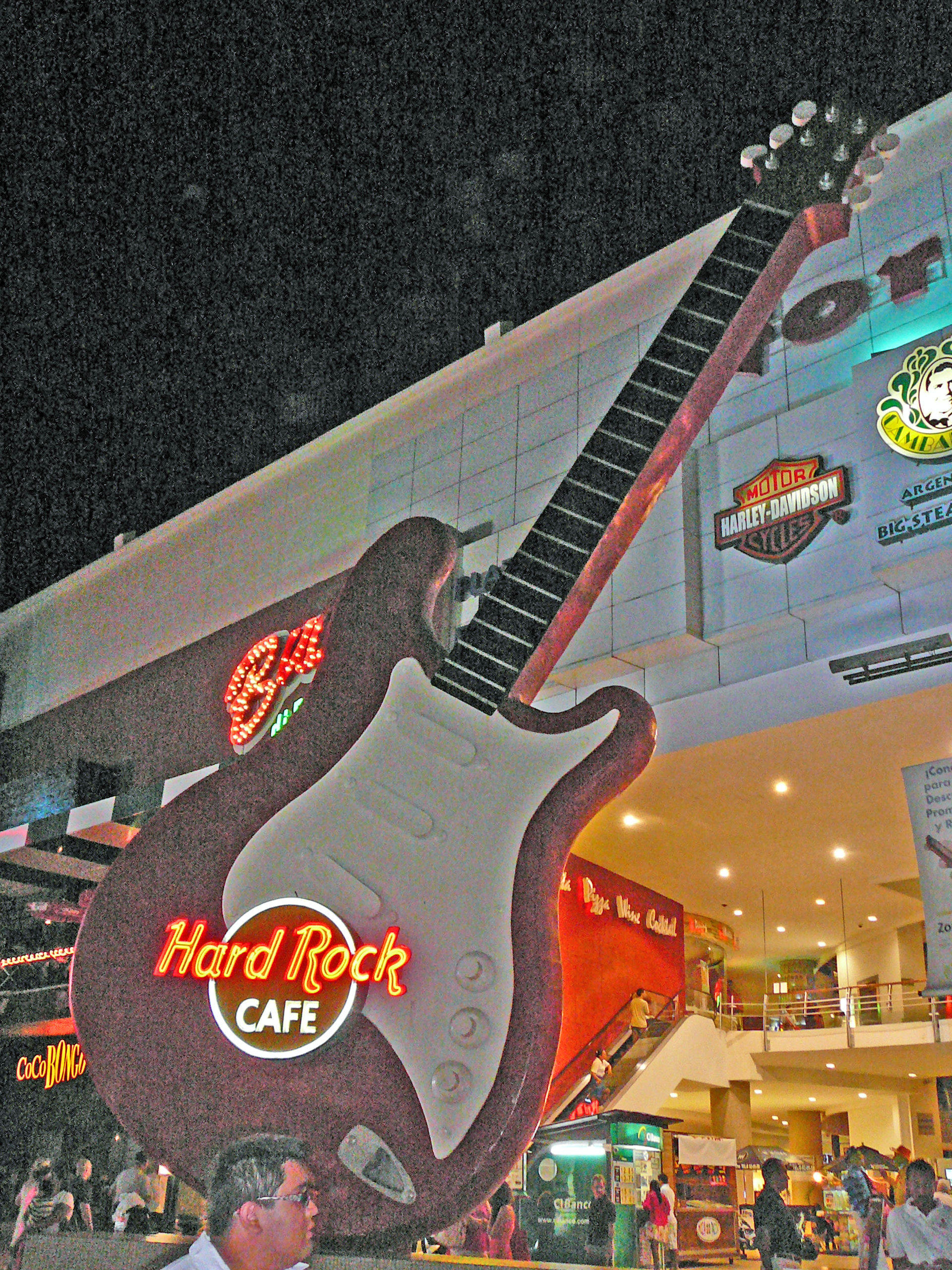
hard rock cafe, Cancun 
A night out at Senor frogs 
Beach in Cancun 
Riu Palace, Cancun
A Reef Worth Knowing
MUSA was built to protect natural reefs by giving divers somewhere else to go. It worked. The sculptures now act as artificial reef structures, drawing marine life and easing pressure on more fragile areas. What started as an experiment has become one of the most unique dive sites in the world.
Manchones Grande, nearby, remains what it has always been: a thriving, natural reef with strong currents and healthy marine life. Together, the two sites offer a contrast that makes each one better.
One shows what can be created.
The other shows what must be protected.
The Last Look Back
When you leave Isla Mujeres, you carry it with you in small ways. The way the water looked just before you descended. The shape of a turtle moving through blue. The still faces of statues slowly becoming something else.
There is no need to dress it up.
It is enough to have been there.
And if you go back, the reef will not remember you.
But it will be just as good.


Comments