

Chasing Sunsets and Exploring the Deep Blue

Updated: Sep 14

The sea is never still. It moves even when it looks calm. The sky does the same. I learned this by chasing sunsets and diving into the deep blue. Two worlds that never stay the same for long. One fades upward. One drops away.
This is a travel story. It is also a scuba diving story. It is about light that disappears and water that swallows sound. It is about Roatan reefs, Caribbean horizons, and the small moments between breath and silence.
The Edge of Daylight
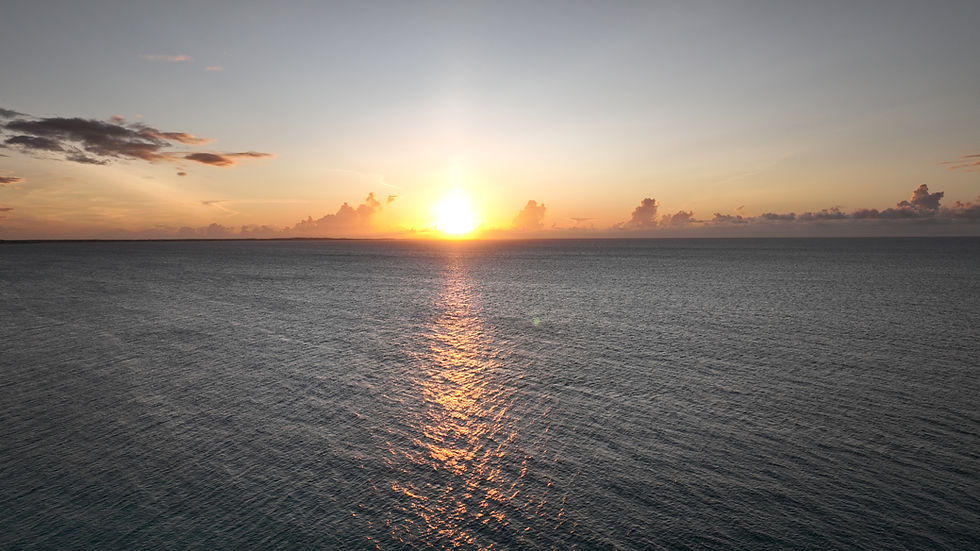
Sunsets happen fast at the coast. One moment the sun is sharp and heavy. The next it is low and red, like it is tired from the day. The ocean catches the color and holds it for a moment. Then it lets it go.
I have watched sunsets from different places. Beaches in Roatan. Docks in quiet harbors. Open stretches of sand where the wind carries salt into your eyes. The pattern is always the same. People stop talking. Phones come out. Then phones go back into pockets. The moment asks for attention, not documentation.
Sunset photography is simple. The light does the work. You only need to be there early. The best images come before the sun touches the water. Not after. Not during. Just before. That is when the sky burns orange and the sea turns dark blue at the edges.
For travel photographers and sunset lovers, timing matters more than gear. The light does not wait.
The Pull of the Deep Blue
After the sun disappears, the ocean feels different. It becomes a memory of color. But below the surface, another world continues.
Scuba diving changes how you understand silence. There is no wind underwater. No distant voices. Only breath. Only bubbles rising like small silver thoughts.
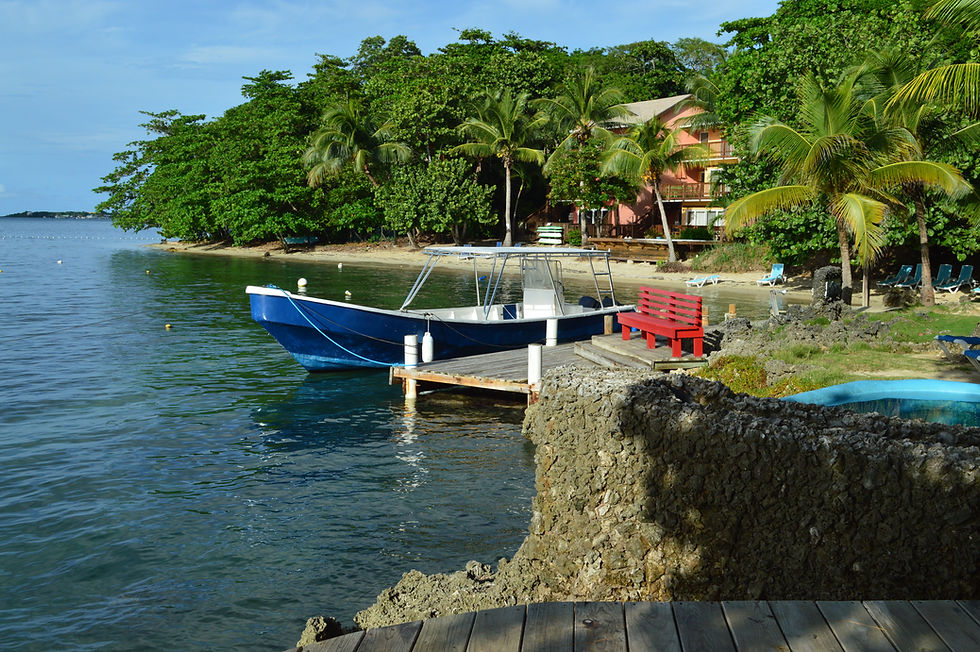
In Roatan and other Caribbean reefs, the water is warm. It holds you gently. You descend and the world above becomes a bright sheet that slowly fades. Then it is gone.
The deep blue is not empty. It is full of movement. Parrotfish move like painted shadows across coral. Angelfish drift without hurry. Sometimes a turtle passes like an old traveler who has no interest in your presence.
You do not chase them. You observe. That is the rule underwater.
Between Two Worlds
Sunsets and diving seem like opposites. One is fire and sky. The other is pressure and water. But they are connected. Both demand presence. Both strip away noise.
On land, you watch the sun fall. In the sea, you watch light rise and scatter. In both places, you are small.
I started pairing the two. A dive in the morning. A sunset in the evening. It is a rhythm that stays simple. Enter water. Exit water. Watch light change. Repeat.
Travel teaches patterns like this. Not schedules. Patterns.
Scuba Diving in Roatan and the Caribbean
Roatan is known for its reefs. The coral walls are alive with movement. Soft coral sways like underwater grass. Hard coral builds structure like old cities.
Diving here is often calm. Visibility can stretch far on good days. You descend along reef edges where fish gather in groups that shift like weather systems.
Some dives are shallow. Some drop deeper into blue water where the reef disappears beneath you. That is where the feeling changes. You are no longer near anything solid. Only water and direction.
For beginners, the reef feels welcoming. For experienced divers, it feels familiar but never identical. No two dives are the same. Current, light, and marine life change the story each time.
What You See When You Slow Down
The ocean rewards patience. If you rush, you miss it.
A stoplight parrotfish might pass in its bright stage, then again in muted tones if you know what to look for. A moray eel might sit half hidden, watching without expression. Small cleaner fish move around larger fish like attendants at a quiet station.
There is no drama underwater. Only behavior.
That is what makes it powerful. You stop expecting events and start noticing patterns.
Sunset Photography Tips from the Shore
Sunset photography is not about complexity. It is about restraint.
Stay still. Let the light change.
Do not overexpose the sky. Let shadows exist. The contrast is what makes the image feel real.
Use the horizon as an anchor. Keep it level. A tilted horizon makes the world feel uncertain in a way the scene does not intend.
Most important, stop shooting before the light is gone. The best moment is often the one just before you think it will get better.
It does not get better. It changes.
The Deep Blue as a Quiet Teacher
Scuba diving teaches patience in a different way. You cannot force anything underwater. You move slowly or you waste energy. You breathe or you do not dive.
The ocean does not respond to urgency.
On some dives, nothing dramatic happens. No sharks. No sudden encounters. Just reef life doing what it has always done. That is enough.
Stillness becomes the point.
Travel Between Sun and Sea
There is a space between sunset and diving. It is not physical. It is mental.
It is the moment when you dry off from the ocean and sit watching the sky change color again. You carry salt on your skin. Your breathing is still slow from the dive. The world feels slightly delayed, like it has not caught up to you yet.
This is where reflection happens. Not during the dive. Not during the sunset. But after both.
People return to sunsets because they are honest. They end without asking permission. There is no pause button. No repetition.
The ocean does the same. It moves whether you watch it or not.
In both cases, you are reminded that time is not something you control. It is something you observe.
That is why travel matters. It puts you in places where observation becomes natural again.
The Deep Blue and the Last Light
At the end of a dive day, you often surface into fading light. The sun is lower now. The ocean is darker. Boats drift in the distance like small markers.
You remove your mask. The world returns in pieces. Sound first. Then distance. Then detail.
You look toward shore and sometimes the sky is already changing again. Another sunset. Another ending.
It feels like the day is breathing out.

Comments