

Petra Sunset at the Treasury: Hiking Jordan’s Ancient City with a GoPro Hero 13 🌅🏜️📸

Updated: Sep 2
📍 Location: Petra, Jordan
🥾 Hike: Siq → Treasury → Al-Khubtha viewpoint
⏱ Duration: ~1–3 hours depending on stops
📷 Best time: Sunrise or sunset (golden stone glow)
🎥 Camera: GoPro Hero 13
The road to Petra begins before dawn, when the Jordanian desert is still holding the last cold breath of night like a gambler clutching his final coin. Wadi Musa wakes slowly. The rocks do not hurry. The wind does not explain itself. Somewhere beyond the dry hills, the ancient city waits with the patience of a king buried standing up.

I carried a GoPro Hero 13 in one hand and enough water to convince myself I was prepared. Nobody is ever prepared for Petra. They say you visit it. That is not true. Petra happens to you.
Entering the Siq Canyon Before Sunset
The first thing you notice is silence. Not true silence, because there are always footsteps, tour guides, horses, distant voices bouncing from stone walls, and the occasional tourist breathing like a malfunctioning accordion on uphill climbs. But beneath all that is a deeper quiet. Ancient places have it. A sort of stillness that makes modern thoughts feel cheap.
The Siq begins narrow and cool. It snakes through sandstone cliffs carved by water and time. The walls rise high above like the sides of a split ocean frozen in rust-red stone. Light pours down in thin ribbons. It feels less like walking through a canyon and more like entering the throat of history itself.
I filmed as I walked, the GoPro Hero 13 strapped steady, catching every turn in clean 4K detail. Petra is difficult terrain for cameras because the shadows and sunlight wrestle constantly. One moment the canyon is dark enough to feel subterranean. The next, gold light spills through the cracks and turns the walls into molten copper.
The Hero 13 handled the changing light beautifully. Every curve in the canyon revealed another frame worth capturing: ancient carvings worn smooth by centuries, drifting desert dust, and travelers disappearing around bends in the stone passage like ghosts wandering through time.
The Nabataeans: Masters of the Desert
The Siq itself feels alive. Water carved it over countless centuries, slicing through the rock like a patient knife.

the entrance at petra 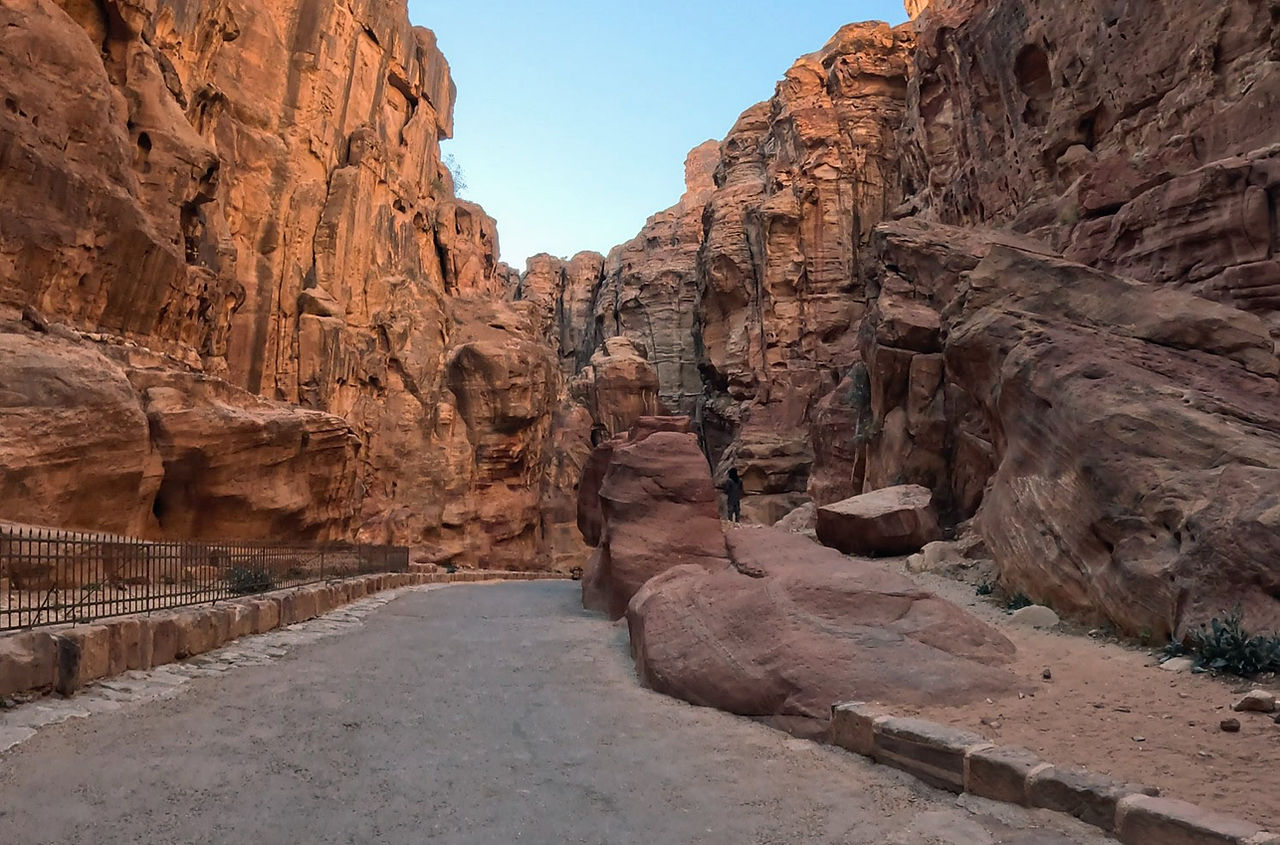
Ths Siq, petra, jordan the treasury, petra, jordan
Along the pathway are channels and grooves built by the Nabataeans, the ancient Arab civilization that transformed Petra into one of the richest trading cities in the ancient world more than two thousand years ago.
The Nabataeans understood the desert in ways modern people understand convenience stores and air conditioning. They traded incense, spices, silk, and perfume across dangerous stretches of Arabia and the Levant. While other men looked at the desert and saw death, the Nabataeans saw roads.
They mastered water collection in one of the harshest landscapes on earth, carving channels into cliffs and building reservoirs that allowed Petra to flourish where logic said it should not. Wealth flowed through the city on camel caravans while kingdoms elsewhere disappeared into dust. Rome eventually absorbed Petra into its empire in 106 AD, but the stone city remained behind like the bones of something too stubborn to vanish completely.
Petra Punishes Haste
As I walked deeper into the Siq, I noticed tourists making the same mistake people make everywhere in the world. They hurried.
They marched toward the Treasury as though they were late for work instead of walking through one of the greatest archaeological sites on earth.
Some barely glanced at the canyon walls. Others spent more time staring at phone screens than the ancient path beneath their feet.
Petra punishes haste.
The beauty of the place is not only the Treasury itself. It is the anticipation. The canyon slowly tightens. The walls rise higher. The light ahead grows brighter. Every step feels like the city is deliberately teasing you.
There are grooves beneath your feet where ancient carts once rolled. You realize traders were hauling goods through this canyon two thousand years ago while probably complaining about taxes, sore feet, and bad weather. Humanity changes costumes but rarely changes dialogue.
I passed horses carrying tourists while their handlers smoked cigarettes and looked entirely unimpressed by history. A cat slept beside a carved wall older than most civilizations. Somewhere ahead, a guide explained Nabataean history in at least three languages at once while sounding equally exhausted in all of them.
The First Glimpse of Al-Khazneh
Then the canyon tightened.
The light ahead sharpened.
And suddenly there it was.
The Treasury.

Al-Khazneh rises from the sandstone cliffs like a hallucination carved by giants with impossible patience. Even after seeing photographs for years, the first glimpse strikes hard. The façade glows pink and amber depending on how the sun hits it. It does not look built. It looks summoned.
Tourists stopped walking the moment they saw it. Cameras lifted into the air like offerings. One man whispered something softly that was probably either spiritual or profanity. In Petra, the line between the two grows thin.
A camel stood nearby chewing thoughtfully while tourists nearly backed into him trying to record vertical video. The camel looked deeply unimpressed. Camels have the emotional range of old bartenders.
I stood there filming with the GoPro Hero 13 while the afternoon light slowly shifted across the Treasury façade. The changing sunlight transformed the stone minute by minute. Soft rose colors deepened into amber and orange as the sun lowered toward the horizon.
I kept the camera in wide angle. The Siq had already taught me why. Narrow stone walls rise too close for anything else. The canyon swallows perspective unless you let it stretch.
The GoPro handled it without complaint. Stabilization smoothed my steps over uneven stone. The movement became steady, almost patient, even when the ground was not.
The GoPro captured the scene beautifully during golden hour. Small details emerged through the lens that were easy to miss standing there in person: drifting dust illuminated by sunlight, swallows circling above the cliffs, and weathered textures carved into the stone by centuries of wind and sand.
Petra breathes with light.
By midday the Treasury can look harsh beneath the desert sun. But near sunset it softens. The cliffs surrounding the plaza catch fire in shades of gold and crimson while shadows stretch long across the ground like spilled ink.
At the Treasury I switched settings. Nothing complicated. 4K, 60 frames. Linear mode when I wanted the stone to feel true. Wide when I wanted the canyon to feel endless. The camera adjusted to the fading light as the day slipped away.
Somewhere nearby, a group of tourists applauded the sunset as if they had personally arranged it with the universe. That felt appropriate somehow. Ancient wonders have a way of exposing human absurdity. Visitors travel halfway around the world to stand before a masterpiece carved into stone, only to spend ten minutes trying to upload Instagram stories using weak desert Wi-Fi.
Still, Petra quiets people eventually.
As the sun lowered farther, conversations softened across the plaza in front of the Treasury. The heat loosened its grip on the canyon. The cliffs darkened from orange to deep red.
I lowered the camera for a while and simply watched.
Travel videos often try too hard. Loud music. Fast edits. Endless narration explaining emotions viewers should already feel for themselves. Petra does not need much help. The place carries its own gravity.
Sometimes the best thing a filmmaker can do is remain silent long enough for the world to speak first.
Returning Through the Siq at Dusk
As evening approached, I began the walk back through the Siq. The canyon looked entirely different in fading light. Shadows swallowed the narrow passageways while the upper cliffs still held the last traces of gold from the sunset above.
Footsteps echoed softly against the stone walls.
The crowds thinned.
A cool desert breeze moved through the canyon.
The GoPro Hero 13 continued performing beautifully in the lower light conditions. Lanterns along parts of the trail cast warm pools of light against the sandstone walls, giving the canyon an almost dreamlike atmosphere. Every corner looked cinematic without trying to be.
By the time I returned to Wadi Musa later that evening, the desert sky had one final performance left.


At the Tetra Tree Hotel, I climbed to the terrace as the last light settled across the mountains surrounding Petra. Nobody else was there. The tables sat empty in the evening air while the town below slowly began to glow against the dark hills.
I ordered a whiskey cocktail and carried it to the edge of the terrace.
The first sip tasted cold and sharp after a full day in the desert. Whiskey belongs to sunsets. It improves their honesty.
The sky burned orange and crimson beyond the rooftops of Wadi Musa while a warm breeze moved quietly across the terrace. Somewhere below, distant traffic drifted through town. A dog barked once and then thought better of it. Otherwise there was only stillness.
I sat alone watching the light fade over Jordan with dust still clinging to my shoes from Petra. It felt like the proper ending to the day. Not dramatic. Not loud. Just a tired traveler, a good drink, and the last colors of the desert slipping slowly into night. Looking for more unforgettable adventures beyond Jordan? Visit my Travel Destinations category for immersive journeys through historic cities, tropical islands, scuba diving locations, and some of the most beautiful places I’ve explored with a camera in hand and dust on my boots.
Hemingway once wrote that nobody you love is ever truly lost while they still exist in your heart. Petra feels something like that. Ancient cities survive because they leave marks on people long after they leave the stone behind.
I finished the whiskey slowly while the final traces of sunlight disappeared beyond the mountains.
My memory cards were full.
The desert had gone dark.
And somewhere beyond the hills, hidden inside the sandstone cliffs, the Monastery waited patiently for tomorrow’s footsteps. If you enjoyed the golden light and desert atmosphere of Petra, explore more breathtaking moments in my Sunset Photography collection, where sunsets from around the world burn across oceans, deserts, mountains, and ancient landscapes in vivid color.
🧠 Practical Truths Travelers Wish They Knew About Petra (and Jordan Travel)
Petra looks effortless from a distance, but on the ground it has weight, heat, and distance that do not always show up in photos. A few things become clear only after you are already inside the canyon.
The Treasury viewpoint hike is steeper than it first appears. What looks manageable on a map becomes a steady climb over uneven stone steps and sun-warmed rock. It is not technical, but it asks more from your legs than most people expect.
Bedouin-guided shortcuts exist along the trails. Some save time, others lead to higher viewpoints you would not easily find alone. These routes are part of the experience, but they are rarely free, and it helps to understand that before taking them.
Early morning is the quietest version of Petra. The Siq feels almost empty, the air is cooler, and the sandstone catches light slowly as the sun rises. By midday, everything changes pace and volume.
Sunset transforms the entire city. The stone shifts from bright orange to deep gold, then into red as shadows stretch across the plaza. The same place feels different depending on the hour.
It is also worth planning ahead before you arrive in Jordan. The Jordan Pass simplifies entry and removes a major layer of logistics. It includes your tourist entry visa fee waiver (normally 40 JOD) as long as it is purchased before arrival and you stay at least two consecutive nights in the country. It also covers entry to Petra during standard daytime hours (6:00 AM to 6:00 PM), with pass options depending on how many days you want to spend in the ancient city.
Beyond Petra, the Jordan Pass includes access to over 40 attractions across Jordan, including places like Wadi Rum and Jerash, making it useful if you are moving through the country rather than staying in one place.
One important detail: it does not include special ticketed experiences such as Petra by Night. Those are separate.
Sorting this out before you land means one less decision in the desert.


Comments